
UV printing is a digital printing method that uses ultraviolet (UV) light to cure specially formulated ink immediately after it is applied to a surface. Unlike conventional ink printing, which often requires time for ink to dry, UV printing produces prints that can be handled almost immediately.
The technology allows full-colour designs, logos, text and images to be printed directly onto materials such as acrylic, wood, glass, metal and certain plastics.
In Kenya, UV printing is increasingly useful for businesses looking to customise signage, corporate gifts, promotional merchandise and branded products.
How Does UV Printing Work?
UV printing uses specialised inks and ultraviolet light to produce printed designs.
The process involves three main steps:
- Artwork preparation: A digital design is prepared and adjusted to fit the dimensions and printing area of the selected material.
- Ink application: The printer deposits UV-curable ink onto the material through its printheads.
- UV curing: UV lamps expose the deposited ink to ultraviolet light, causing it to harden rapidly and form a printed layer on the surface.
Because the ink is cured during printing, there is little waiting time before the finished item can be handled or prepared for delivery.
Depending on the printer, UV printing may also support white ink, clear varnish and raised printing effects.
Types of UV Printing
Different UV printing technologies are designed for different applications.
UV flatbed printing is commonly used for rigid materials and objects placed on a flat printing bed. It is suitable for acrylic signs, wooden items, panels, notebook covers and many promotional products.
UV roll-to-roll printing uses flexible materials supplied on rolls, making it suitable for selected signage films, labels and other compatible media.
Direct-to-cylinder UV printing is designed for bottles, tumblers and similar curved objects. Some UV flatbed printers also support cylindrical items through a compatible rotary attachment.
The correct method depends on the material, shape, dimensions and intended use of the product.
What Materials Can Be UV Printed?
One of the main advantages of UV printing is its compatibility with materials that are difficult to print using conventional methods.
Common materials include:
- Acrylic: Used for display signs, plaques, awards and decorative panels.
- Wood: Suitable for personalised gifts, wooden keyholders, decorative items and selected signage.
- Glass: Used for decorative products, panels and some promotional items, subject to surface preparation.
- Metal: Suitable for aluminium panels, nameplates and coated metal merchandise.
- Plastic: Used for PVC products, phone cases, promotional accessories and other compatible plastic surfaces.
- Leatherette and coated materials: Used for notebook covers, diaries and corporate gifts where ink adhesion is suitable.
Not every material is automatically suitable for UV printing. Some surfaces require cleaning, priming or testing to achieve reliable ink adhesion.
For example, untreated glass and certain plastics can be challenging, while flexible materials may require specially formulated inks.
Common Applications of UV Printing in Kenya
UV printing is used for both business signage and personalised merchandise. Its ability to reproduce detailed, full-colour designs makes it useful for short-run customisation and corporate branding.
1. UV Printing for Custom Signage
UV flatbed printing is well suited to rigid signage materials, including acrylic, PVC boards and selected metal panels.
Common applications include office door signs, reception signs, nameplates, wall displays and promotional panels.
Printing directly onto the material can provide clean graphics without requiring a separate printed sticker.
For example, businesses can use printed acrylic signs for reception areas, office branding and company displays.
For outdoor installations, the ink, substrate and expected exposure should be assessed before production.
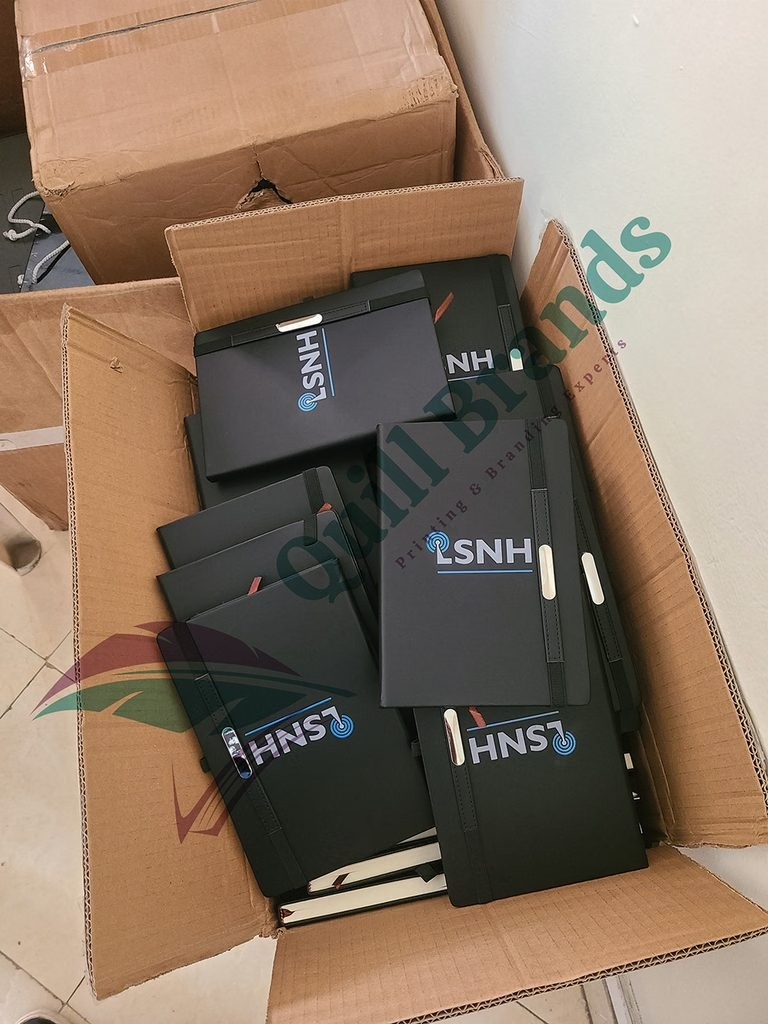
2. Notebook and Diary Branding
UV printing offers a practical way to personalise suitable notebook and diary covers with company logos, names and detailed artwork.
It can be particularly useful for branding coated hardcovers and selected leatherette materials.
Businesses commonly use branded notebooks for employee welcome packs, conferences, training events and corporate gifts.
The suitability of UV printing depends on the cover material and finish.
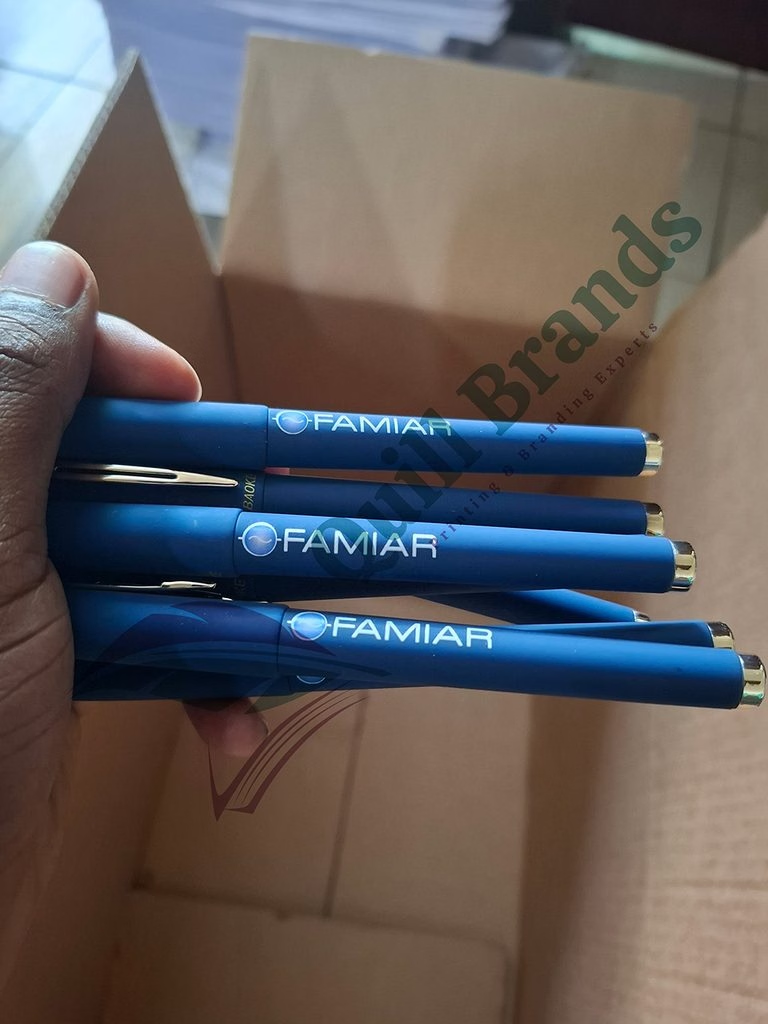
3. Pen and Stationery Branding
Pens, rulers and other small stationery items can be customised using compatible UV printing equipment.
For businesses ordering branded pens, the printing method depends on the barrel material, shape, available printing area and quantity.
UV printing can reproduce detailed logos and multicolour designs on suitable surfaces, making it useful for personalised promotional stationery.
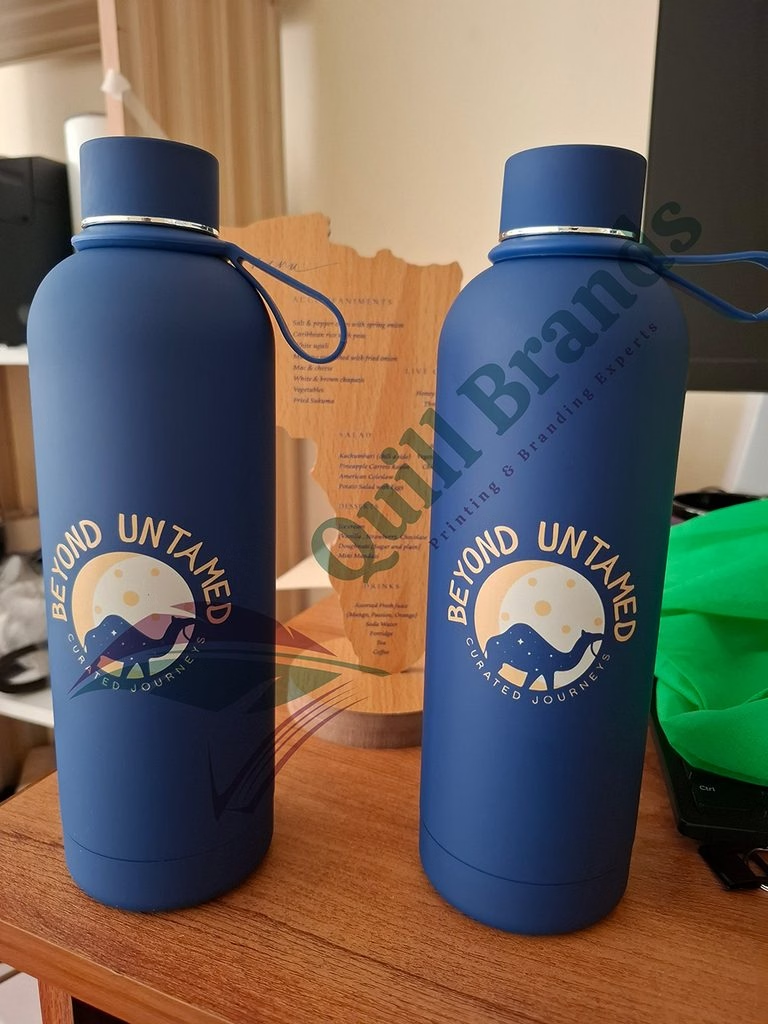
4. Water Bottle and Drinkware Branding
UV printing can also be used to personalise suitable water bottles, tumblers and other drinkware.
The printing method depends on the bottle’s material and shape. Direct printing around a cylindrical bottle requires suitable rotary or direct-to-cylinder equipment.
Another option is UV-DTF transfer printing, where a printed design is transferred onto the item using an adhesive film.
Businesses can explore branded water bottles for corporate gifts, conferences, sporting events and promotional campaigns.
5. Keyholders and Promotional Gifts
Keyholders, phone cases, selected power banks, plaques and other promotional items can be decorated using UV printing.
It is particularly useful for personalisation where customers want names, logos or custom artwork on individual items.
For companies preparing client gifts, staff recognition items or event merchandise, UV printing offers flexibility without requiring a separate printing plate for each design.
Key Benefits of UV Printing
Fast Production
UV ink cures during printing, reducing the drying time associated with many conventional processes. This can make it practical for custom orders and short production runs.
Full-Colour Printing
UV printers can reproduce detailed graphics, photographs, small text and multicolour logos on compatible materials.
White ink, where supported, can also improve colour visibility on dark or transparent surfaces.
Printing Directly on Different Materials
UV printing works with a broad range of rigid and selected flexible surfaces. This makes it useful for businesses that want to brand different products using digital artwork.
Customisation and Personalisation
Digital artwork can be changed between print jobs, making UV printing suitable for personalised names, designs and small-batch branded merchandise.
Special Printing Effects
Some UV printing systems can produce raised textures, spot gloss effects and layered graphics using clear or white ink.
These effects are useful for premium signage, decorative pieces and promotional products.
Is UV Printing Durable?
UV printing can produce durable results, particularly on compatible rigid surfaces that have been properly prepared.
However, durability depends on several factors:
- The type of UV ink used.
- The material being printed.
- Surface preparation and ink adhesion.
- Exposure to sunlight, moisture and abrasion.
- How the printed product is handled and cleaned.
UV printing should not automatically be described as scratch-proof, waterproof or permanently fade-resistant.
For items that will be handled frequently, washed regularly or displayed outdoors, it is important to select an appropriate printing process and test the finish where necessary.
UV Printing vs Traditional Printing Methods
UV printing is not always the best option for every product. The right technique depends on the material, quantity and intended finish.
| Printing method | Best suited for |
|---|---|
| UV printing | Direct full-colour printing on compatible rigid surfaces and objects |
| Screen printing | Repeated designs on suitable products, particularly larger quantities |
| Sublimation printing | Polyester fabrics and specially coated products |
| UV-DTF printing | Transferable designs for compatible hard surfaces and curved objects |
For example, sublimation is often a better option for full-colour polyester sportswear, while UV flatbed printing is suitable for acrylic signage or selected promotional products.
What Is the Difference Between UV Printing and UV-DTF Printing?
The main difference is how the design reaches the product.
Direct UV printing applies and cures ink directly on the object’s surface.
UV-DTF printing produces a design on a special transfer film, which is then applied to a compatible surface using an adhesive layer.
UV-DTF is particularly useful for decorating certain curved or awkwardly shaped items that cannot easily be placed in a flatbed printer.
For these applications, Quill Brands offers UV-DTF magic stickers suitable for various hard-surface branding projects.
How Much Does UV Printing Cost in Kenya?
The cost of UV printing in Nairobi depends on the specifications of the job rather than one fixed printing price.
The main pricing factors include:
- Material: Acrylic, wood, metal and other surfaces have different preparation and material costs.
- Printing size: Larger designs generally require more ink and production time.
- Quantity: The number of items affects the overall production cost and may influence unit pricing.
- Design requirements: Artwork preparation, individual names, white ink and special printing effects can affect the quotation.
- Finishing: Cutting, polishing, mounting and other finishing requirements add to the total cost.
For an accurate quotation, provide the product or material, required dimensions, quantity and artwork.
UV Printing Services in Nairobi, Kenya
At Quill Brands, we help businesses and individuals customise signage, promotional products and corporate merchandise.
Whether you need acrylic signs, branded notebooks, personalised gifts or custom printed items, choosing the right printing method is important for achieving a suitable finish.
If you are considering UV printing for your project, share your artwork, preferred material, quantity and dimensions so we can assess the best printing option.
Contact Quill Brands for a printing quotation or call +254 799 025 335.
Frequently Asked Questions About UV Printing
Can UV printing be done on glass, metal and plastic?
Yes. UV printing can be used on many glass, metal and plastic surfaces. However, some materials require a primer or other surface preparation to ensure proper ink adhesion.
Is UV printing waterproof?
Cured UV ink can resist moisture, but the finished print is not automatically waterproof under every condition. Water resistance depends on the ink, substrate, surface preparation and intended use.
Can UV printing be used on curved objects?
Yes, but the equipment matters. Cylindrical products may require a rotary attachment or direct-to-cylinder UV printer. UV-DTF transfers are another option for compatible curved surfaces.
Is UV printing environmentally friendly?
UV-LED printing can offer environmental advantages, including reduced solvent evaporation compared with some solvent-based printing methods. However, its overall environmental impact depends on ink formulation, energy consumption, materials and waste management.
Is UV printing the same as Spot UV?
No. UV printing uses UV-curable ink to create graphics, often directly on a product.
Spot UV usually refers to applying a glossy UV-cured coating to selected areas of an already printed design, such as a logo on a business card.
You can see an example in our Spot UV business cards.
Is UV printing suitable for outdoor signage?
UV printing can be used for outdoor signage when the ink and substrate are designed for outdoor conditions. The expected lifespan depends on weather exposure, ink type and surface preparation. Protective finishing may be advisable for some applications.
Final Thoughts
UV printing is a versatile printing method for customising signage, promotional products and many rigid materials. Its main strengths are rapid curing, detailed digital printing and the ability to work with surfaces that may not suit conventional methods.
For the best results, choose the printing technique based on the material, product shape and expected usage rather than appearance alone.
If you are looking for UV printing and branding solutions in Nairobi, Quill Brands can help you explore suitable options for your next project.

